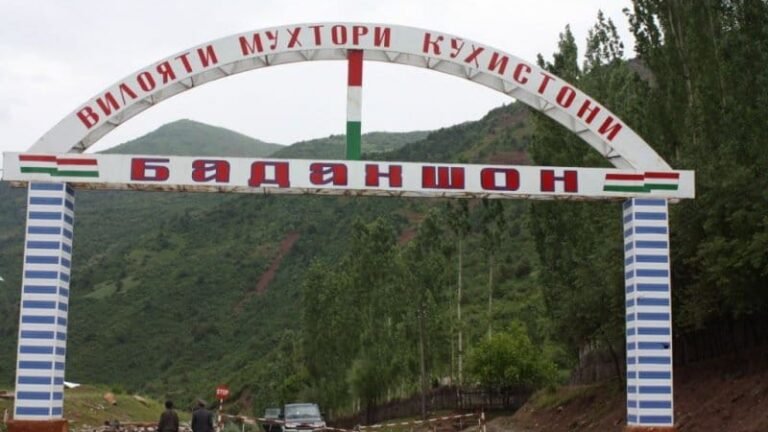
Tajikistan is attracting new loans for the reconstruction of the Rushan–Varzesh road in the Gorno-Badakhshan Autonomous Oblast.
A loan agreement for $30 million was signed during the visit of Abdulhamid Al-Khalifa, Director-General of the OPEC Fund for International Development, to Tajikistan.
The parties also signed the first Country Partnership Strategy for 2026–2028, which envisages continued cooperation in sectors such as energy, transport, and food security.
The first phase involves the reconstruction of 82.2 kilometers of the 235-kilometer Rushan–Vanj highway, which is part of the Dushanbe–Kulma–China border international corridor and a section of Asian Highway AH66.
However, these funds are only part of the foreign financing for this project. Previously, the Islamic Development Bank allocated another $93.8 million for the first phase of this project. Project documents indicate that it will be co-financed by the OPEC Fund and the Government of Tajikistan.
Thus, the announced financing from two international financial organizations for the first phase of this road’s reconstruction alone reaches at least $123.8 million. The project also mentions a financial contribution from the Government of Tajikistan, but its exact amount is not specified in the documents.
The work is divided into two main sections. The first section, Dashtishipad—Shidz, approximately 40 kilometers long, involves the construction of a two-lane road and 3 bridges. The second section, Shidz—Pastkhuf, approximately 42 kilometers long, includes the construction of 6 more bridges and about 10 kilometers of connecting roads. The project also includes the installation of a vehicle weight control system and the creation of a multifunctional logistics center.
This road is of particular importance for the Gorno-Badakhshan Autonomous Oblast, with approximately 217,000 residents and 370 settlements, as access to food and other essential goods, medical facilities, education, and markets largely depends on this road. After the completion of the first phase, approximately 25,000 people will benefit from this road.
Why is a strategic road once again financed by foreign funds?
Authorities have not yet explained why the reconstruction of the Rushan–Varzesh road is mainly financed by foreign sources rather than the state budget of Tajikistan.
However, an analysis by the International Monetary Fund indicates that approximately 60–70 percent of public funding in Tajikistan is carried out through the public investment program, which, in turn, involves attracting loans and foreign grants, and only 30–40 percent of public funding is provided directly from the budget.
This indicates that the reliance of large infrastructure projects on banks and international donors is not an exception but has become one of the main models for financing the country’s development.
Furthermore, this approach is also evident in official policy. Emomali Rahmon, in his address for 2026, spoke about the start of construction and reconstruction of approximately 300 kilometers of international and national highways totaling about 3 billion somoni and instructed the Ministry of Transport to develop cooperation with “development partners” for the construction of roads of international importance. Among the projects announced for 2026 were the Vahdat—Obigarm, Guliston—Kulob, Khorugh—Roshtkala, Murghab—Kulma, Baljuvon—Sari Khosor, Khistevarz—Kanibadam roads, the Kulob bypass, and the Labi Jar—Sangvor bridges.
Obigarm–Nurabad: One Road and Several International Investors
One striking example of this financing model is the construction of the Obigarm–Nurabad road. The Asian Development Bank allocated $110 million as a grant for the first phase of this project. The OPEC Fund allocated about $40 million in the form of a loan for the same project. According to the initial project, the Government of Tajikistan’s contribution to this road section was estimated at $28.1 million.
Another 44-kilometer section of the road is financed by a state loan from the European Bank for Reconstruction and Development totaling up to $150 million. In 2024, the Asian Infrastructure Investment Bank allocated an additional $75.5 million for the construction of a 920-meter bridge over the Rogun HPP and connecting roads. The government’s contribution to this specific project is estimated at approximately $5.08 million, while the total project cost is $80.58 million.
Thus, the financing for this strategic highway is distributed among several international institutions: the Asian Development Bank, the OPEC Fund, the European Bank for Reconstruction and Development, and the Asian Infrastructure Investment Bank.
Dangara–Guliston: A Grant and Another State Loan
A similar model is applied to the reconstruction of the 49-kilometer Dangara–Guliston highway, with a total cost of approximately 144 million euros. In October 2024, the Asian Development Bank allocated $86.67 million as a grant for this project. The current two-lane road is expected to be expanded to four lanes.
In 2025, the European Bank for Reconstruction and Development also joined the financing of this project and offered Tajikistan a state loan of up to 38 million euros. According to bank documents, the government’s contribution is approximately 22.5 million euros, most of which is intended to cover taxes and other related expenses.
Over $110 Million in Grants for Roads in the South of the Country
Another large portion of foreign aid is directed to the roads of Khatlon Province. In 2020, the Asian Development Bank allocated $67.49 million for a road network strengthening project. This project involves the reconstruction of the Dangara–Okmazar and Khulbuk–Kangurt roads. In 2022, an additional $43.2 million was allocated as a grant for this project.
Thus, within this project alone, the Asian Development Bank has allocated over $110 million in grants for road infrastructure in southern Tajikistan.
Approximately $740 Million in Just Over 7 Years
Based on information available in the documents of international financial institutions for just a few major road construction and reconstruction projects, $737 million in foreign investments were approved or allocated to Tajikistan between December 2019 and August 2026. Approximately $307 million of this amount consisted of grants, i.e., non-repayable aid, and approximately $429 million were loans and other forms of repayable financing.
This refers only to a few major projects discussed in this article. Other road construction projects financed by China, the World Bank, other international organizations, and bilateral partners are not included in this analysis. For this reason, the actual volume of foreign investment in Tajikistan’s road construction sector during this period could be many times greater.
Why does the state choose this financing model?
International financing offers one significant advantage for the government: international banks can immediately allocate tens or hundreds of millions of dollars for projects planned over several years, eliminating the need to fully finance construction from the current state budget.
The International Monetary Fund notes that the growth of foreign financing allows the government to direct domestic reserves towards social expenditures and other budget items.
However, the main question remains: after decades of implementing public investment projects, why is the construction of roads of strategic importance for Tajikistan still so dependent on receiving another grant or a new loan?
And if the number of large infrastructure projects and the volume of foreign financial obligations continue to grow, how sustainable can this development model remain in the future?